TL;DR: 1X's new NEO hands matter because they combine force-controlled motion, tactile shear sensing, washability, and production scale in one home-robot hand.
The short X post about NEO's ungloved hand points to a bigger shift in humanoid robotics: the hand is becoming the API between embodied AI and everyday life. The question is no longer just whether a robot can close a gripper, but whether it can feel slip, yield safely, wash up, and keep working after thousands of ordinary household contacts.
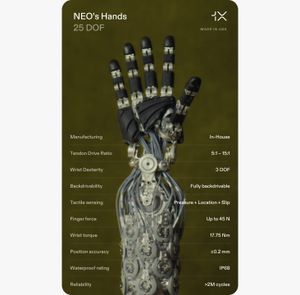
Ungloved, the new 1X hand looks beautiful. 25 DoF, tendon-driven, force-controlled, tactile sensing, IP68 sealed, +/-0.2mm positioning accuracy. 1X has already described NEO as being built in America's most vertically integrated humanoid robot factory, and that strategy shows up here too; every hand is built end-to-end in-house, from tendon materials and 1X Motors to soft polymers, skin and tactile sensing. They have stated hundreds have already come off the line, with capacity for 10,000 hands this year.
- AG (@AGkorthos) July 9, 2026
The original X lead is embedded so readers can inspect the claim trail before the analysis.
What did 1X announce about NEO's hands?
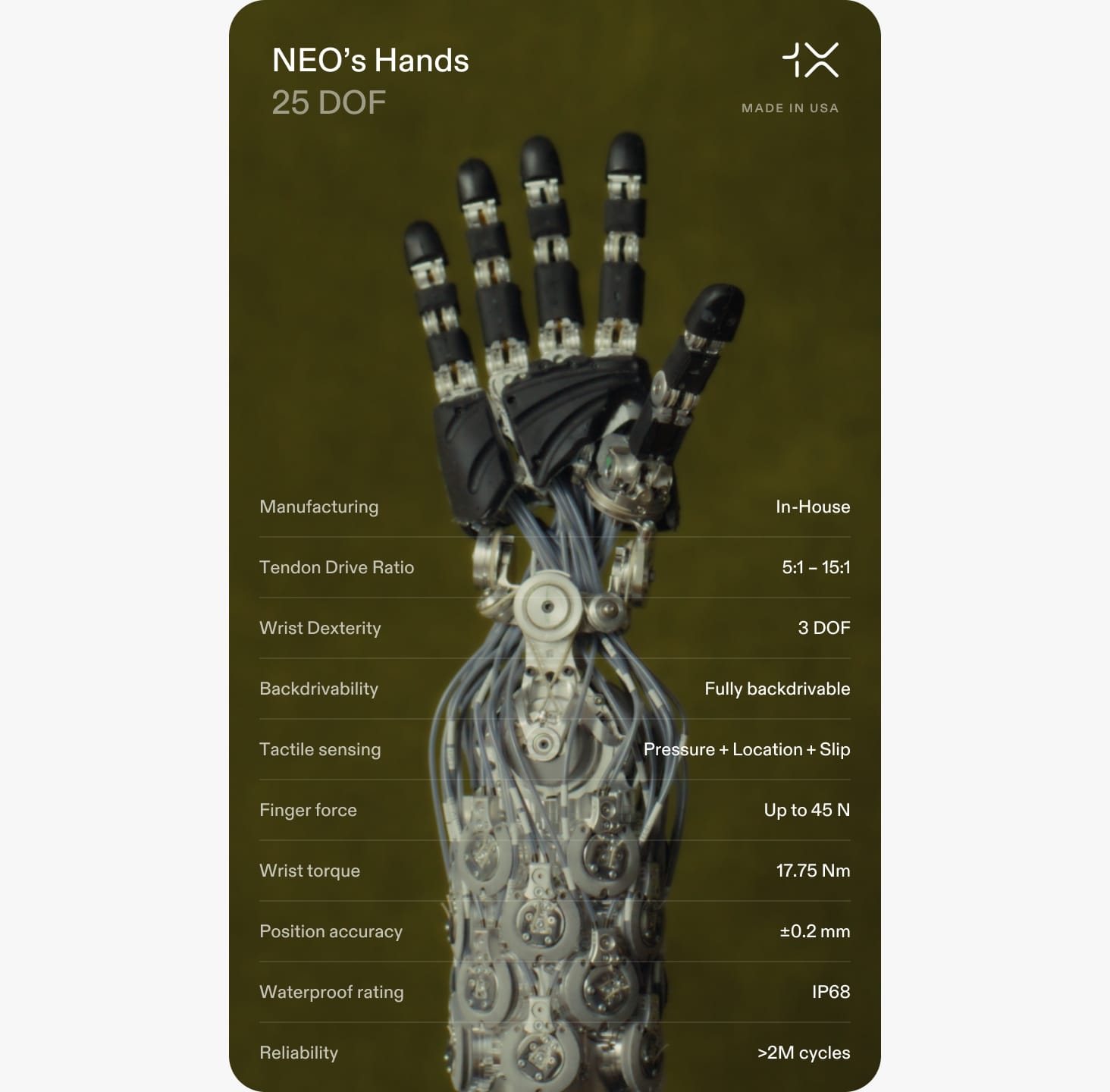
1X says the new NEO hands have 25 degrees of freedom: 22 fully actuated degrees in the fingers and palm plus three at the wrist. The company describes the system as tendon-driven, natively force-controlled, and fully backdrivable through low gear ratios of roughly 5:1 to 15:1.
That matters because a hand that can feel force through its joints is not just moving. It is measuring. 1X frames the design as force transparency: when the hand pushes on an object, the reaction travels back through the tendon drive instead of disappearing inside a stiff gearbox.
Why is touch the real story?
The most useful claim is not the DOF count by itself. It is the mix of force control and tactile skin. 1X says the hands measure normal force, contact location, and shear across the fingertips and surfaces. Shear is the signal that tells a robot a glass is starting to slide before it falls.
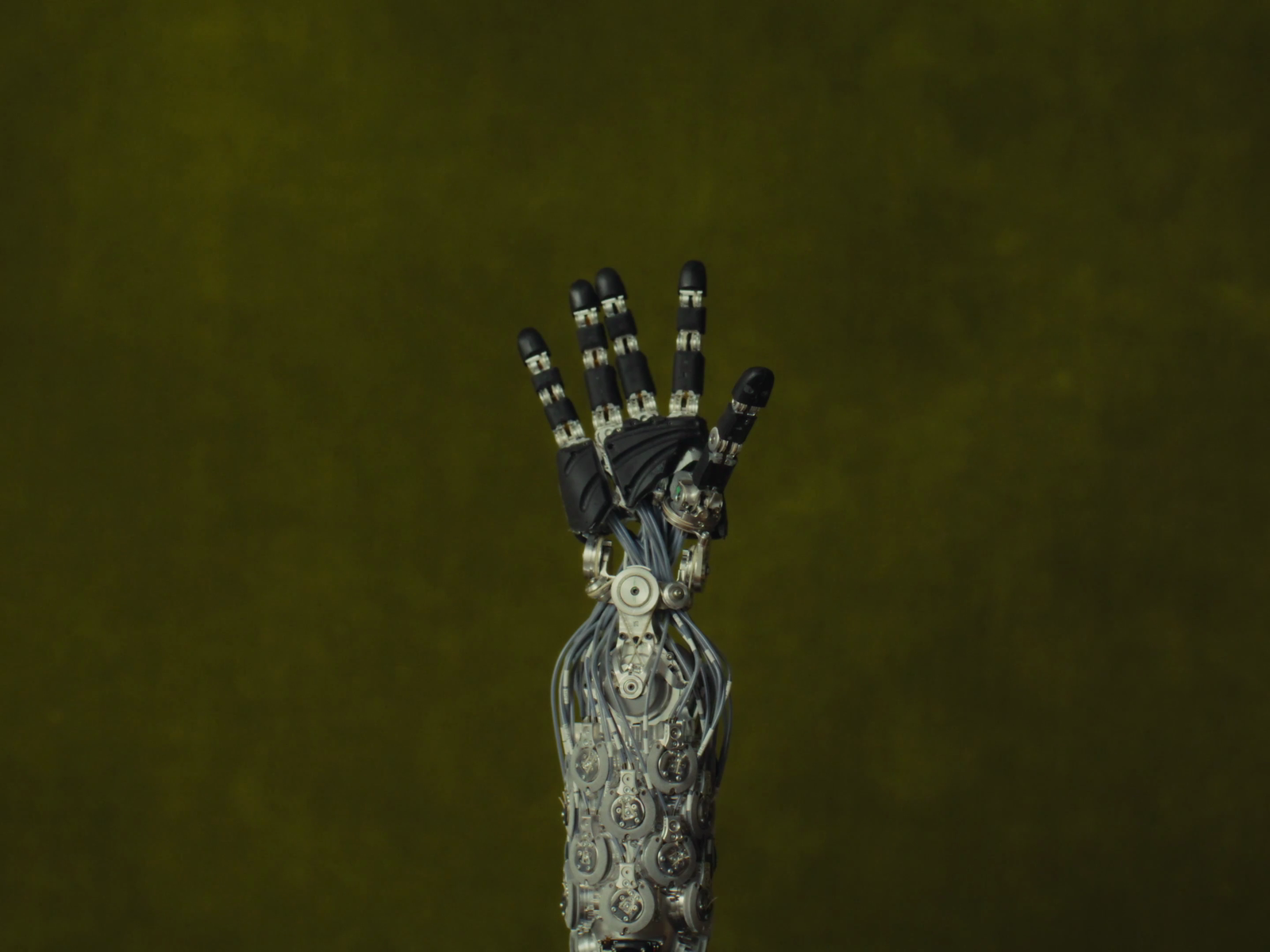
For home robotics, that is more important than a flashy demo. Dishes are wet, fruit bruises, cables snag, drawers bind, and transparent objects can confuse vision. A robot that depends only on cameras is still guessing during contact. A robot that can feel contact has a second channel for correcting itself.
How does NEO compare with other robot hands?
The competitive field is crowded. Shadow Robot's Dexterous Hand is a mature research platform with 20 actuated DOF, four additional under-actuated movements, tendon drive, tactile options, and more than 100 sensors. CMU's LEAP Hand attacks the problem from the other direction: a low-cost research hand that can be built for under $2,000. Unitree's Dex5-1 is reported as a 20-DOF hand, with the tactile Dex5-1P variant adding 94 sensors.
1X's strongest differentiator is the bundle. The company is claiming force-controlled DOF, tactile shear, IP68 waterproofing, food-safe materials, small-object accuracy, and a dedicated production line in the same hand. Humanoid.guide's read is appropriately cautious: no single number is unprecedented, but the combination is rare.
Why does manufacturing change the meaning of the demo?
A hand that works once in a launch video is a prototype. A hand that can be built, tested, serviced, and replaced at scale is a product path. 1X says hundreds of hands have already come off its line and that it has capacity for 10,000 hands this year. Its Hayward NEO Factory is described as a vertically integrated 58,000-square-foot facility producing motors, tendons, sensors, batteries, structures, and soft goods in-house.
That does not prove general home autonomy. It does make the hand launch more than a component update. If 1X can manufacture reliable touch at scale, it can collect more real contact data, improve policies faster, and discover failure modes in actual homes instead of only in lab demos.
What should readers watch next?
The right question is not whether NEO's hand is the most advanced. That is marketing language. The right question is whether the hand survives kitchens, sinks, dust, oils, dropped objects, and months of tendon wear while still giving clean tactile data to the robot's learning system.
If the answer is yes, the hand becomes a bottleneck-breaker for home robots. If the answer is no, it becomes another beautiful demo in a field full of them. Either way, the race has moved from grippers to touch.
FAQ
How many degrees of freedom do 1X NEO hands have?
1X says the new NEO hands have 25 total degrees of freedom: 22 in the fingers and palm plus three at the wrist.
Are the NEO hands waterproof?
1X claims the hands are IP68 waterproof and food-safe, which would let NEO wash its hands and work around sinks. That claim still needs long-term field validation.
Why does tactile shear sensing matter?
Shear helps detect slip. For household work, slip detection can be the difference between holding a glass safely and dropping it after vision alone fails.
Does this prove NEO is ready for unsupervised home chores?
No. The hand improves the hardware foundation, but autonomy depends on policy reliability, safety, serviceability, and real-world testing beyond launch videos.